
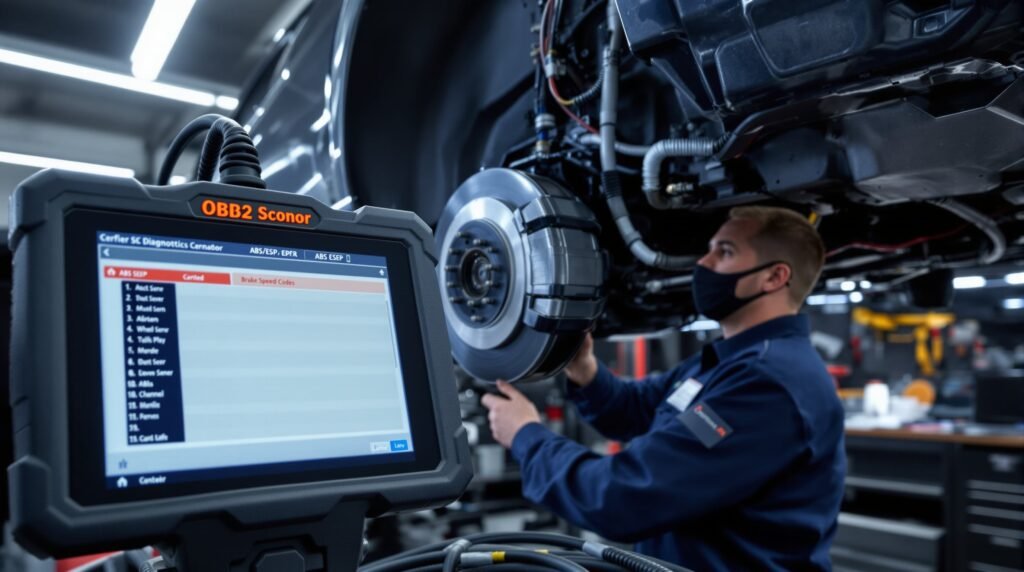
Świecą się kontrolki ABS / ESP / kontroli trakcji: Szybka ścieżka diagnostyczna
Wprowadzenie
Kiedy na desce rozdzielczej zapala się kontrolka ABS, łatwo jest wpaść w panikę - ale weź oddech. Chociaż ten wskaźnik ostrzegawczy wymaga uwagi, zwykle nie jest to nagły wypadek. W rzeczywistości większość kontrolek ABS można całkowicie naprawić i często wskazują one na jednego winowajcę: wadliwy czujnik prędkości koła. Zrozumienie, co wywołuje te kontrolki i jak je prawidłowo zdiagnozować, może zaoszczędzić setki euro i niepotrzebnego stresu.
Niniejszy przewodnik przeprowadzi Cię przez ścieżkę diagnostyczną stosowaną przez profesjonalnych techników, pokazując, dlaczego wiele warsztatów naprawczych nie zauważa prawdziwego problemu i jak szybko przywrócić pojazd do bezpiecznej eksploatacji.
Dlaczego zapalają się kontrolki ABS: Najczęstsze przyczyny
Lampki ostrzegawcze ABS (układ zapobiegający blokowaniu kół podczas hamowania) i ESP (elektroniczny program stabilizacji toru jazdy) mają wspólną architekturę elektryczną, co oznacza, że jedna usterka może wywołać wiele ostrzeżeń. Oto najczęstsi winowajcy:
**Usterki czujnika prędkości obrotowej** - Są one odpowiedzialne za około 70% wszystkich aktywacji kontrolki ABS. Umieszczone w pobliżu każdej piasty koła czujniki prędkości obrotowej monitorują prędkość obrotową i przekazują te krytyczne dane do modułu ABS. Nawet niewielkie pogorszenie jakości sygnału lub korozja złącza spowoduje wyzwolenie kodu błędu.
**Problemy z czujnikiem kąta skrętu kierownicy** - Czujnik kąta skrętu kierownicy pomaga układowi ESP w określeniu zamiaru pojazdu. Nieprawidłowo ustawiony lub nieprawidłowo działający czujnik dezorientuje system, szczególnie podczas pokonywania zakrętów, i aktywuje ostrzeżenia ABS i ESP.
**Problemy z czujnikiem ciśnienia hydraulicznego** - Ten czujnik monitoruje ciśnienie w układzie hamulcowym. Jeśli odczyt jest nieprawidłowy, moduł ABS podejrzewa nieszczelność lub awarię systemu i wyłącza ochronę ABS.
**Awaria pompy ABS lub silnika** - Czasami pompa ABS ulega awarii, uniemożliwiając modulację ciśnienia podczas hamowania awaryjnego.
**Błędy komunikacji modułów ABS** - Błędy komunikacji magistrali CAN między modułami mogą powodować fałszywe ostrzeżenia ABS, zwłaszcza po niedawnych pracach elektrycznych lub odłączeniu akumulatora.
Dlaczego tanie narzędzia OBD2 nie wykrywają kodów ABS?
Oto kluczowy fakt: większość skanerów OBD2 klasy konsumenckiej nie może odczytywać kodów modułu ABS. Mogą one uzyskać dostęp tylko do modułu sterowania układem napędowym (silnik/skrzynia biegów). ABS, ESP i inne krytyczne dla bezpieczeństwa systemy wykorzystują chronione protokoły diagnostyczne wymagające profesjonalnego sprzętu z pełnym dostępem do modułu.
Dlatego mechanicy z podstawowymi narzędziami często błędnie diagnozują problemy z ABS. Odczytują ogólne kody, nie znajdują nic oczywistego i marnują czas na niepotrzebne naprawy. Prawidłowa diagnostyka ABS wymaga skanera zdolnego do:
Wpływ na bezpieczeństwo: Dlaczego nie można tego ignorować
ABS i ESP nie są opcjonalnymi udogodnieniami - to krytyczne systemy bezpieczeństwa. Gdy jeden z nich jest wyłączony:
Podczas gdy wielu kierowców korzysta z pojazdów z wyłączonym układem ABS przez krótki czas, dłuższa eksploatacja znacznie zagraża bezpieczeństwu. Prawidłowa diagnoza i naprawa powinny być traktowane priorytetowo.
Profesjonalna ścieżka diagnostyczna: Krok po kroku
Krok 1: Odczytaj wszystkie kody modułów ABS
Podłącz profesjonalny skaner diagnostyczny do pojazdu i pobierz wszystkie kody błędów zapisane w module ABS. Zapisz je dokładnie - opowiadają one historię tego, co zawiodło.
Krok 2: Sygnały prędkości porównywanych kół
Oto praca detektywistyczna: kody usterek często wskazują na jedno koło, ale prawdziwy problem może leżeć gdzie indziej. Jeśli prędkość FL (przedniego lewego) koła jest przerywana, należy sprawdzić cały obwód FL - czujnik, złącze, wiązkę i połączenia pinowe modułu ABS. Kody na wielu kołach często wskazują na wspólny problem z masą lub zasilaniem, a nie na awarie czterech pojedynczych czujników.
Krok 3: Monitorowanie danych na żywo podczas jazdy
To właśnie tutaj profesjonaliści oddzielają się od zgadywania. Gdy pojazd powoli się toczy, monitoruj w czasie rzeczywistym sygnały prędkości kół ze wszystkich czterech kół. Powinieneś zobaczyć:
Winowajcą jest każdy czujnik, którego wskazania spadają do zera, ulegają gwałtownym wahaniom lub okresowo zanikają.
Krok 4: Weryfikacja czujnika kąta skrętu kierownicy
Poproś kogoś, aby powoli obrócił kierownicę do pełnej blokady w obu kierunkach, podczas gdy ty będziesz monitorować odczyt czujnika kąta skrętu kierownicy na skanerze. Powinien on:
Krok 5: Test cykliczny zaworu ABS
Profesjonalne skanery posiadają funkcję “testu siłownika”. Uruchomienie tego testu powoduje uruchomienie elektromagnesów ABS. Podczas otwierania i zamykania zaworów w obszarze hamulców powinny być słyszalne wyraźne kliknięcia. Cicha praca wskazuje na awarię zaworu.
Krok 6: Kontrola fizyczna
Po zebraniu danych przeprowadź kontrolę wizualną:
Kiedy wymienić, a kiedy naprawić
Wymień komponent, jeśli:
Napraw połączenia, jeśli:
Podział kosztów: Ile faktycznie zapłacisz
Zrozumienie cen pomaga w ocenie szacunków dotyczących napraw:
Najczęstsza naprawa - pojedynczy czujnik prędkości koła - kosztuje zazwyczaj 150-250 euro w niezależnych warsztatach, 300-500 euro w salonach dealerskich.
Często zadawane pytania
Czy mogę jeździć z włączoną kontrolką ABS?
Tak, na krótkich dystansach, aby dotrzeć do punktu naprawy. Unikaj jazdy po autostradzie i śliskiej nawierzchni. Nowoczesne pojazdy zachowują normalne hamowanie cierne - tracą tylko funkcje stabilności ABS.
Czy migająca kontrolka ABS różni się od kontrolki stałej?
Tak. Migająca kontrolka wskazuje, że system ABS aktywnie walczy (sygnał z czujnika wnika i znika). Świecąca kontrolka oznacza zapisany kod błędu. Oba wymagają diagnostyki, ale miganie oznacza, że problem występuje teraz.
Czy muszę wymienić wszystkie cztery czujniki prędkości kół?
Nie. Wymień tylko uszkodzony czujnik (czujniki) zidentyfikowany na podstawie kodów diagnostycznych i testów danych na żywo. Wymiana wszystkich czterech czujników jest kosztowna i niepotrzebna, chyba że awarii uległo wiele czujników.
Czy mogę jeździć po autostradzie z wyłączonym ABS?
Niezalecane. Awaryjne hamowanie na autostradach z wyłączonym układem ABS może spowodować zablokowanie kół i utratę kontroli nad pojazdem, zwłaszcza przy złych warunkach pogodowych.
Czy moje ubezpieczenie pokryje koszty naprawy ABS?
Nie. Naprawy ABS wchodzą w zakres normalnej konserwacji i nie są objęte standardowym ubezpieczeniem samochodowym. Niektóre plany rozszerzonej gwarancji mogą obejmować awarie czujników.
Dlaczego czujniki prędkości kół tak często ulegają awarii?
Są one narażone na działanie soli drogowej, wilgoci i ciągłych wibracji. Same czujniki rzadko ulegają wewnętrznym awariom - częściej wnikanie wody lub korozja złączy przerywa sygnał.
Czy powinienem kupić czujniki OEM czy z rynku wtórnego?
Czujniki na rynku wtórnym od renomowanych dostawców (Bosch, Delphi, Continental) działają identycznie jak OEM przy znacznych oszczędnościach. Unikaj bardzo tanich czujników z serwisu eBay; często ulegają one awarii w ciągu kilku miesięcy.
Wnioski
Kontrolka ABS lub ESP nie jest zaproszeniem do paniki ani automatyczną drogą do rachunku za naprawę w wysokości 800 euro. Uzbrojony w metodologię diagnostyczną stosowaną przez profesjonalistów, możesz dokładnie określić, co zawiodło i dokonać odpowiednich napraw. W większości przypadków ten prosty czujnik prędkości obrotowej koła - część o wartości 100 euro, kosztująca 150-250 euro - jest kompletnym rozwiązaniem.
Nie pozwól, aby warsztaty zmuszały Cię do niepotrzebnej wymiany modułów. Domagaj się prawidłowej diagnostyki, poproś o wydruk zakresu pokazujący aktualne dane z czujników i sprawdź, czy kody usterek rzeczywiście uzasadniają proponowane naprawy. Dzięki takiemu systematycznemu podejściu przywrócisz funkcjonalność ABS w bezpieczny i niedrogi sposób.

 English
 French
 Spanish
 German
 Polish
 Czech
Czech Romanian
 Italian