
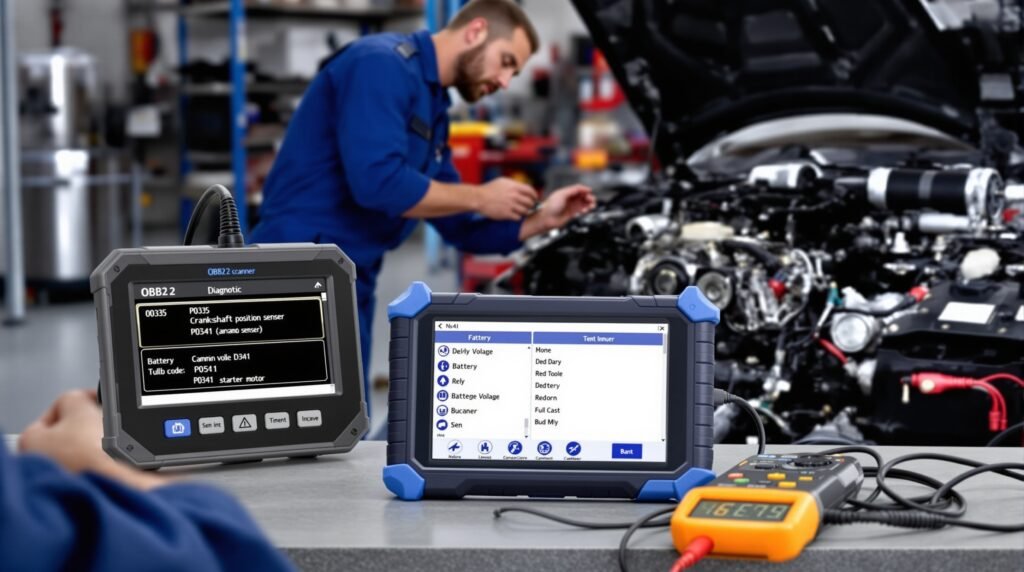
Úvod
V okamžiku, kdy otočíte klíčkem v zapalování a nic neslyšíte, nebo ještě hůře, slyšíte pomalé skřípání, může se rychle dostavit panika. Nenastartované auto je jedním z nejpalčivějších automobilových problémů, se kterými se řidič může setkat. Ať už jste přijeli pozdě do práce, uvízli jste na silnici nebo jste prostě jen frustrovaní na vlastní příjezdové cestě, pochopení příčin nenastartování vám ušetří čas, peníze i stres. Díky moderní diagnostice OBD2 nyní můžete identifikovat hlavní příčinu dříve, než utratíte více než 500 EUR za díly, které možná nebudete potřebovat.
Bezpečnost především: Doporučené postupy při kličkování
Než začnete s diagnostikou, nezapomeňte na toto důležité bezpečnostní pravidlo: **nikdy neotáčejte motor déle než 30 sekund po sobě**. Prodloužené vytáčení může:
- Poškození startéru
- nadměrné vybíjení baterie
- Přehřátí zapalovacího systému
- Zbytečné opotřebení vstřikovačů paliva.
Mezi jednotlivými pokusy o nastartování nechte vždy 2-3 minuty, aby startér vychladl a baterie se mírně zotavila.
Rychlé kontroly: Před skenováním
Před připojením skeneru OBD2 proveďte tato jednoduchá pozorování:
Kontrola napětí baterie: Zapněte světlomety. Jsou jasná? Neztmavují se výrazně, když nastartujete? Tlumená nebo zcela tmavá přístrojová deska znamená slabý nebo vybitý akumulátor - nejčastější příčinu stavu, kdy nelze nastartovat.
Test světlometů: Plný jas = zdravá baterie. Tlumená světla = slabá baterie. Žádná světla = vybitá baterie.
Zápach paliva: Otočte klíčkem do polohy “Zapnuto” (bez kliky) a poslechněte si 2-3sekundový zvuk zapnutí palivového čerpadla. Pokud je u výfuku silně cítit palivo, je možné, že palivové čerpadlo běží, ale vstřikovače se nespustí.
Kontrolka imobilizéru: Podívejte se na přístrojovou desku, zda se na ní nenachází symbol zabezpečení/klíče. Blikající kontrolka imobilizéru signalizuje problém s ochranou proti krádeži, který brání nastartování motoru.
Zvuk startéru: Určete, zda slyšíte rychlé cvakání (problém s elektřinou), pomalé skřípání (slabá baterie/špatný startér) nebo úplné ticho (problém s baterií/elektroinstalací).
Rozhodovací strom: Pomalá klika vs. normální klika
Toto rozlišení je zásadní:
SLOW CRANK (motor se otáčí pomalu, zvuk skřípění):
- Slabá/vybitá baterie (nejpravděpodobněji)
- Špatný startér
- Zkorodované svorky baterie
- Špatné zapojení baterie ke startéru
NORMAL CRANK (motor se točí normálními otáčkami, ale nezapálí se):
- Špatné palivové čerpadlo nebo tlak paliva
- Závada snímače kliky
- Porucha snímače vačky
- Porucha zapalovací cívky
- Problém s imobilizérem/bezpečnostním systémem
- Ucpání vstřikovače paliva
Odborná diagnostická cesta
1. krok: Přečtení chybových kódů
Připojte skener OBD2 a načtěte všechny kódy. Klíčové kódy zahrnují:
- **P0335**: Obvod snímače polohy klikového hřídele
- **P0341**: Výkon snímače polohy vačkového hřídele
- **P0442**: Ovládání palivového čerpadla
- **P0340**: Obvod snímače polohy vačkového hřídele
- **U0100**: Ztráta komunikace s ECU (bezpečnostní modul)
I když nejsou přítomny žádné kódy, mohou být v bezpečnostním modulu uloženy kódy, které vyžadují profesionální skener.
1. krok: Sledování dat v reálném čase
Sledujte tyto parametry v reálném čase během provozu:
- **Tlak paliva**: U benzinových motorů by měl být při klikovém stavu 3-5 barů (43-73 psi). Pokud se tlak nezvýší, je pravděpodobně vadné palivové čerpadlo.
- **Injektor Pulse**: Všechny válce by měly během startování vykazovat synchronizované pulzní signály. Chybějící impulsy indikují problémy se snímačem klikového hřídele.
- **Signál otáček**: Otáčky by se měly během klikovky zvyšovat. Pokud se zasekne na 0, je snímač kliky pravděpodobně nefunkční.
- **Nastavení zážehu**: Při startu by se mělo předbíhat. Statické časování indikuje problémy se snímačem nebo řídicí jednotkou.
1. krok: Napětí baterie při zatížení
Změřte napětí baterie při startování:
- **Nad 10,5 V**: Baterie je dostatečná; problém je jinde
- **9.0-10.5V**: Slabá baterie nebo špatný startér, který způsobuje nadměrné zatížení
- **Pod 9 V**: Baterie je příliš slabá na startování motoru
Pokud používáte multimetr, zkontrolujte napětí jednotlivých článků baterie - slabý článek znemožní nastartování.
1. krok: Testování komponentů
Palivové čerpadlo: Poslouchejte, zda se při zapnutí ozve zvuk prvního spuštění. Pomocí palivového manometru ověřte tlak během kliky.
Snímač kliky: Zkouška odporu (obvykle 200-500 ohmů). Změřte střídavé napětí během kliky (mělo by být 0,5-2 V AC).
Startér: Proveďte zatěžovací zkoušku startéru nebo zkoušku úbytku napětí na svorkách startéru.
Alternátor: Zkontrolujte správné nabíjecí napětí (13,5-14,5 V při volnoběhu). Selhávající alternátor nedobije vybitou baterii.
Běžné poruchy bez spuštění
1. **Mrtvá baterie** (35% případů): Nejčastější. Věk 5+ let nebo vystavení chladnému počasí.
2. **Slabý startér** (25%): Opotřebení, vnitřní zkrat nebo zadřená ložiska.
3. **Špatný snímač polohy klikového hřídele** (15%): ECU nemůže určit polohu motoru pro časování vstřikování/zapalování.
4. **Porucha palivového čerpadla** (12%): Elektrické čerpadlo selhalo, relé se rozepnulo nebo se zasekl regulátor tlaku paliva.
5. **Imobilizér/bezpečnostní systém** (8%): Ztráta komunikace, vadná cívka přijímače nebo problém s transpondérovým klíčem.
6. **Špatný alternátor** (3%): Nedostatečné nabíjení způsobuje vyčerpání baterie.
7. **Zablokování palivového systému** (2%): Ucpaný filtr, voda v palivu nebo nános karbonu ve vstřikovačích.
Komplikace v chladném počasí
Zima přináší další problémy se zákazem startu:
Želírování paliva: Pod bodem mrazu nafta houstne. Benzín negeluje, ale v nádrži může kondenzovat voda a zamrzat v palivovém potrubí.
Pokles kapacity baterie: Efektivní kapacita baterie klesá o 50% při 0 °C a o 90% při -20 °C. Baterie dimenzovaná na 600 A při studeném startu může v zimě dodávat pouze 300 A.
Zvýšená viskozita oleje: Hustý olej zvyšuje zatížení startéru a zhoršuje problémy se slabou baterií.
Řešení: Použijte ohřívače baterie, ohřívače bloku, aditiva do paliva nebo nechte vozidlo přes noc v garáži.
Rozdělení nákladů: Rozpočítejte si opravu
- **Výměna baterie**: 80-200 EUR (nejdostupnější řešení)
- **Startér**: 300-500 EUR (včetně práce)
- **Snímač polohy klikového hřídele**: 50-300 € (díly se liší podle vozidla)
- **Sestava palivového čerpadla**: 300-800 EUR (nejdražší běžná závada)
- **Alternátor**: 250-600 EUR
- **Modul imobilizéru**: 400-1000 € (vyžaduje programování)
Proto je diagnostika důležitá - chybná diagnóza palivového čerpadla, když je problémem baterie za 80 EUR, vás stojí 720 EUR za zbytečné díly a práci.
Často kladené otázky
Otázka: Je bezpečné nastartovat auto s pomalou klikou?
Odpověď: Ano, nastartování může potvrdit, zda problém souvisí s baterií. Pokud vůz po nastartování normálně nastartuje, je viníkem baterie. Pokud stále startuje pomalu, je podezření na startér nebo na vážné poškození baterie.
Otázka: Může špatný alternátor zabránit startování?
Odpověď: Nepřímo - selhávající alternátor nedobíjí baterii, což způsobuje její vybíjení. Vůz nastartuje, když je plně nabitý, ale po několika dnech se baterie vybije.
Otázka: Co když OBD skener neukazuje žádné kódy?
Odpověď: To vlastně pomáhá zúžit diagnózu. Žádné kódy obvykle ukazují na problémy s baterií, startérem, palivovým čerpadlem (elektrická závada) nebo imobilizérem, nikoli na závady snímačů.
Otázka: Mám zkusit nastartovat auto nárazem nebo tlakem?
Odpověď: Moderní vozidla s posilovačem řízení, ABS a elektronickým zapalováním nelze bezpečně nastartovat. Tato metoda funguje pouze u starších vozidel s mechanickými systémy.
Otázka: Jak dlouho vydrží palivové čerpadlo?
Odpověď: Moderní palivová čerpadla mají obvykle životnost přes 100 000 km. U starších vozidel může dojít k poruše při 80 000 km. Příliš nízký stav nádrže urychluje opotřebení.
Otázka: Může špatná baterie způsobit kódy snímačů?
Odpověď: Ano. Napětí nižší než 10 V způsobuje chyby signálu snímače a falešné kódy. Před diagnostikou závad snímače vždy ověřte skutečné napětí baterie.
Otázka: Jak nejrychleji zjistíte, zda se jedná o baterii?
Odpověď: Použijte zátěžový tester baterie (20 EUR v každém obchodě s autodíly) nebo vozidlo nastartujte. Obojí poskytne okamžitou odpověď během několika minut.
Závěr
Nechtějící nastartovat auto nemusí nutně znamenat nákladnou opravu. Systematickým diagnostickým přístupem - kontrolou napětí baterie, čtením kódů, sledováním tlaku paliva a signálů klikového hřídele a metodickým testováním součástí - zjistíte skutečný problém a vyhnete se nákladným chybám. Moderní technologie OBD2 vám dává do rukou diagnostiku na profesionální úrovni a mění “auto nechce nastartovat” z paniky v řešitelnou hádanku.
Nedovolte, aby vám strach z neznámého vyčerpal peněženku. Nejdříve diagnostikujte, pak opravujte.
 English
 French
 Spanish
 German
 Polish
 Czech
Czech Romanian
 Italian