
Einführung
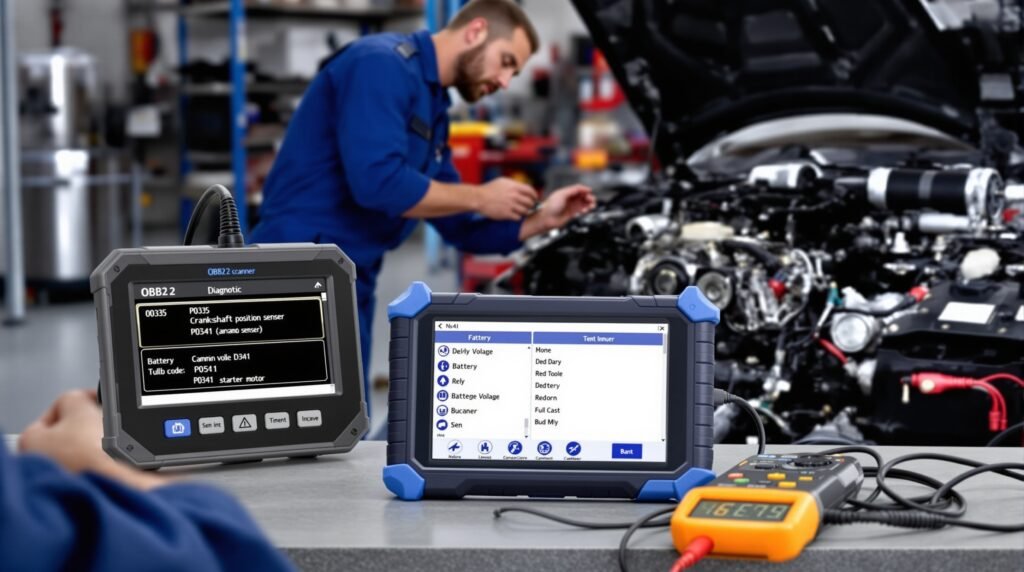
In dem Moment, in dem Sie den Zündschlüssel drehen und nichts hören - oder schlimmer noch, ein langsames schleifendes Geräusch - kann schnell Panik aufkommen. Ein Auto, das nicht anspringt, ist eines der dringendsten Probleme, mit denen ein Autofahrer konfrontiert werden kann. Egal, ob Sie zu spät zur Arbeit kommen, am Straßenrand festsitzen oder einfach nur frustriert in Ihrer eigenen Einfahrt stehen - wenn Sie wissen, was die Ursache für einen nicht anspringenden Motor ist, sparen Sie Zeit, Geld und Stress. Mit der modernen OBD2-Diagnose können Sie jetzt die Grundursache ermitteln, bevor Sie 500 € und mehr für Teile ausgeben, die Sie vielleicht gar nicht brauchen.
Sicherheit geht vor: Bewährte Praktiken beim Kurbeln
Bevor Sie mit der Diagnose beginnen, sollten Sie diese wichtige Sicherheitsregel beachten: **Niemals den Motor länger als 30 Sekunden hintereinander anlassen**. Längeres Kurbeln kann:
- Beschädigung des Anlassers
- Übermäßige Entladung der Batterie
- Überhitzung der Zündanlage
- Unnötiger Verschleiß der Einspritzdüsen
Lassen Sie immer 2-3 Minuten zwischen den Startversuchen verstreichen, damit der Anlasser abkühlen und die Batterie sich etwas erholen kann.
Schnell-Checks: Bevor Sie scannen
Bevor Sie einen OBD2-Scanner anschließen, führen Sie diese einfachen Beobachtungen durch:
Batteriespannung prüfen: Schalten Sie die Scheinwerfer ein. Sind sie hell? Werden sie deutlich dunkler, wenn Sie den Motor anlassen? Ein schwaches oder völlig dunkles Armaturenbrett deutet auf eine schwache oder leere Batterie hin - die häufigste Ursache für einen nicht anspringenden Motor.
Scheinwerfertest: Volle Helligkeit = gesunde Batterie. Schwaches Licht = schwache Batterie. Kein Licht = leere Batterie.
Kraftstoffgeruch: Drehen Sie den Schlüssel in die Stellung “Ein” (nicht kurbeln) und achten Sie auf ein 2-3 Sekunden dauerndes Geräusch beim Anlassen der Kraftstoffpumpe. Wenn Sie am Auspuff starken Kraftstoffgeruch wahrnehmen, kann es sein, dass die Kraftstoffpumpe zwar läuft, die Einspritzdüsen aber nicht zünden.
Wegfahrsperren-Leuchte: Schauen Sie auf Ihrem Armaturenbrett nach einem Sicherheits-/Schlüsselsymbol. Eine blinkende Wegfahrsperrenleuchte zeigt an, dass ein Problem mit der Diebstahlsicherung vorliegt, das den Motorstart verhindert.
Anlassergeräusch: Stellen Sie fest, ob Sie ein schnelles Klicken (elektrisches Problem), ein langsames Schleifen (schwache Batterie/schlechter Anlasser) oder völlige Stille (Batterie/Kabelproblem) hören.
Der Entscheidungsbaum: Langsames Kurbeln vs. Normales Kurbeln
Diese Unterscheidung ist entscheidend:
SLOW CRANK (Motor dreht langsam durch, Schleifgeräusch):
- Schwache/defekte Batterie (höchstwahrscheinlich)
- Schlechter Anlasser
- Korrodierte Batteriepole
- Schlechte Verkabelung zwischen Batterie und Anlasser
NORMAL CRANK (der Motor dreht mit normaler Geschwindigkeit, zündet aber nicht):
- Schlechte Kraftstoffpumpe oder Kraftstoffdruck
- Fehler Kurbelwellensensor
- Nockensensorfehler
- Ausfall der Zündspule
- Problem mit Wegfahrsperre/Sicherheitssystem
- Blockierung der Kraftstoffeinspritzdüse
Professioneller diagnostischer Weg
### Schritt 1: Störungscodes lesen
Schließen Sie einen OBD2-Scanner an und rufen Sie alle Codes ab. Die wichtigsten Codes umfassen:
- **P0335**: Schaltkreis des Kurbelwellenstellungssensors
- **P0341**: Leistung des Nockenwellenpositionssensors
- **P0442**: Steuerung der Kraftstoffpumpe
- **P0340**: Schaltkreis des Nockenwellensensors
- **U0100**: Kommunikation mit ECU (Sicherheitsmodul) verloren
Auch wenn keine Codes vorhanden sind, können Codes im Sicherheitsmodul gespeichert sein, die einen professionellen Scanner erfordern.
### Schritt 2: Live-Datenüberwachung
Überwachen Sie diese Parameter in Echtzeit, während Sie kurbeln:
- **Kraftstoffdruck**: Sollte bei Benzinmotoren beim Anlassen 3-5 bar (43-73 psi) betragen. Wenn der Druck nicht ansteigt, ist wahrscheinlich die Kraftstoffpumpe defekt.
- **Einspritzpumpenimpuls**: Alle Zylinder sollten beim Kurbeln synchronisierte Pulssignale zeigen. Fehlende Impulse weisen auf Probleme mit dem Kurbelsensor hin.
- **Drehzahlsignal**: Sollte beim Kurbeln ansteigen. Bleibt es bei 0 stehen, ist der Kurbelwellensensor wahrscheinlich defekt.
- **Zündzeitpunkt**: Sollte beim Starten vorrücken. Ein statischer Zündzeitpunkt deutet auf Sensor- oder ECU-Probleme hin.
### Schritt 3: Batteriespannung unter Last
Messen Sie die Batteriespannung während des Anwerfens:
- **Über 10,5 V**: Die Batterie ist ausreichend; das Problem liegt woanders
- **9.0-10.5V**: Schwache Batterie oder schlechter Anlasser, der eine übermäßige Belastung verursacht
- **Unter 9V**: Die Batterie ist zu schwach, um den Motor zu starten
Prüfen Sie die Spannung der einzelnen Batteriezellen, wenn Sie ein Multimeter verwenden - eine einzelne schwache Zelle verhindert das Starten.
### Schritt 4: Bauteilprüfung
Kraftstoffpumpe: Beim Einschalten auf das Ansauggeräusch achten. Verwenden Sie einen Kraftstoffdruckmesser, um den Druck beim Anlassen zu prüfen.
Kurbelwellensensor: Widerstand prüfen (normalerweise 200-500 Ohm). Messen Sie die Wechselspannung beim Anlassen (sollte 0,5-2V AC betragen).
Anlasser: Führen Sie einen Lasttest des Anlassers oder einen Spannungsabfalltest an den Anschlüssen des Anlassers durch.
Lichtmaschine: Prüfen Sie, ob die Ladespannung korrekt ist (13,5-14,5 V im Leerlauf). Eine defekte Lichtmaschine kann eine entladene Batterie nicht wieder aufladen.
Häufige Fehler beim Nichtstarten
1. **Tote Batterie** (35% der Fälle): Am häufigsten. Alter 5+ Jahre oder Exposition gegenüber kaltem Wetter.
2. **Schwacher Anlasser** (25%): Verschleiß, interner Kurzschluss oder festgefressene Lager.
3. **Schlechter Kurbelwellenstellungssensor** (15%): ECU kann die Motorposition für den Einspritz-/Zündzeitpunkt nicht bestimmen.
4. **Kraftstoffpumpe ausgefallen** (12%): Elektrische Pumpe ausgefallen, Relais offen oder Kraftstoffdruckregler klemmt.
5. **Wegfahrsperre/Sicherheitssystem** (8%): Verlorene Kommunikation, defekte Empfängerspule oder Transponderschlüsselproblem.
6. **Schlechte Lichtmaschine** (3%): Unzureichende Ladung führt zur Entleerung der Batterie.
7. **Blockierung des Kraftstoffsystems** (2%): Verstopfter Filter, Wasser im Kraftstoff oder Kohleablagerungen in der Einspritzdüse.
Komplikationen bei kaltem Wetter
Der Winter bringt zusätzliche Herausforderungen mit sich, wenn der Motor nicht anspringt:
Kraftstoff-Gelierung: Dieselkraftstoff verdickt sich bei Temperaturen unter dem Gefrierpunkt. Benzin geliert nicht, aber durch Kondensation kann sich Wasser im Tank bilden, das in den Kraftstoffleitungen einfriert.
Kapazitätsabfall der Batterie: Die effektive Kapazität einer Batterie sinkt um 50% bei 0°C und um 90% bei -20°C. Eine Batterie, die für Kaltstart-Ampere (CCA) von 600 A ausgelegt ist, liefert im Winter möglicherweise nur 300 A.
Erhöhte Ölviskosität: Dickflüssiges Öl erhöht die Belastung des Anlassers und verschlimmert Probleme mit schwachen Batterien.
Lösung: Verwenden Sie Batterieheizungen, Blockheizungen, Kraftstoffadditive oder lassen Sie das Fahrzeug über Nacht in der Garage.
Kostenaufschlüsselung: Budget für Ihre Reparatur
- **Austausch des Akkus**: 80-200 € (die günstigste Lösung)
- **Anlasser**: 300-500 € (einschließlich Arbeit)
- **Kurbelwellenstellungssensor**: 50-300 € (Teile variieren je nach Fahrzeug)
- **Kraftstoffpumpenbaugruppe**: 300-800 € (teuerster häufiger Fehler)
- **Alternative**: €250-600
- **Wegfahrsperrenmodul**: 400-1000 € (Programmierung erforderlich)
Deshalb ist die Diagnose so wichtig - eine Fehldiagnose einer Kraftstoffpumpe, wenn das Problem eine 80-Euro-Batterie ist, kostet Sie 720 Euro an unnötigen Ersatzteilen und Arbeitskosten.
Häufig gestellte Fragen
F: Ist es sicher, einem Auto, das langsam anspringt, Starthilfe zu geben?
A: Ja, eine Starthilfe kann bestätigen, ob das Problem mit der Batterie zusammenhängt. Wenn das Auto nach der Starthilfe normal anspringt, ist die Batterie der Übeltäter. Wenn es immer noch langsam anspringt, liegt der Verdacht auf den Anlasser oder einen schweren Batterieschaden nahe.
F: Kann eine defekte Lichtmaschine das Starten verhindern?
A: Indirekt - eine defekte Lichtmaschine lädt die Batterie nicht mehr auf, wodurch sie sich entlädt. Das Auto springt an, wenn es voll aufgeladen ist, fällt aber aus, wenn die Batterie nach einigen Tagen entladen ist.
F: Was ist, wenn der OBD-Scanner keine Codes anzeigt?
A: Dies hilft bei der Eingrenzung der Diagnose. Keine Codes deuten in der Regel auf Probleme mit der Batterie, dem Anlasser, der Kraftstoffpumpe (elektrisches Versagen) oder der Wegfahrsperre hin und nicht auf Sensorfehler.
F: Sollte ich versuchen, ein Auto anzustoßen oder anzuschieben?
A: Moderne Fahrzeuge mit Servolenkung, ABS und elektronischer Zündung können nicht gefahrlos per Bump-Start gestartet werden. Diese Methode funktioniert nur bei älteren Fahrzeugen mit mechanischen Systemen.
F: Wie lange hält eine Kraftstoffpumpe?
A: Moderne Kraftstoffpumpen halten in der Regel über 100.000 km. Bei älteren Fahrzeugen kann es zu einem Ausfall bei 80.000 km kommen. Ein zu niedriger Tankinhalt beschleunigt den Verschleiß.
F: Kann eine schlechte Batterie Sensorcodes verursachen?
A: Ja. Eine Spannung unter 10 V verursacht Sensorsignalfehler und falsche Codes. Prüfen Sie immer die tatsächliche Batteriespannung, bevor Sie Sensorfehler diagnostizieren.
F: Wie kann ich am schnellsten feststellen, ob es an der Batterie liegt?
A: Verwenden Sie einen Lasttester für die Batterie (20 € in jedem Autoteileladen) oder geben Sie Starthilfe. Beides liefert innerhalb von Minuten sofortige Antworten.
Schlussfolgerung
Ein Auto, das nicht anspringt, muss nicht unbedingt eine teure Reparatur bedeuten. Durch einen systematischen Diagnoseansatz - Prüfen der Batteriespannung, Lesen von Codes, Überwachen von Kraftstoffdruck und Kurbelwellensignalen sowie methodisches Testen von Komponenten - können Sie das wahre Problem identifizieren und kostspielige Fehler vermeiden. Die moderne OBD2-Technologie gibt Ihnen professionelle Diagnosemöglichkeiten an die Hand und verwandelt das Problem “Auto springt nicht an” von einer Panik in ein lösbares Rätsel.
Lassen Sie nicht zu, dass die Angst vor dem Unbekannten Ihren Geldbeutel belastet. Erst diagnostizieren, dann reparieren.
 English
 French
 Spanish
 German
 Polish
 Czech
Czech Romanian
 Italian