
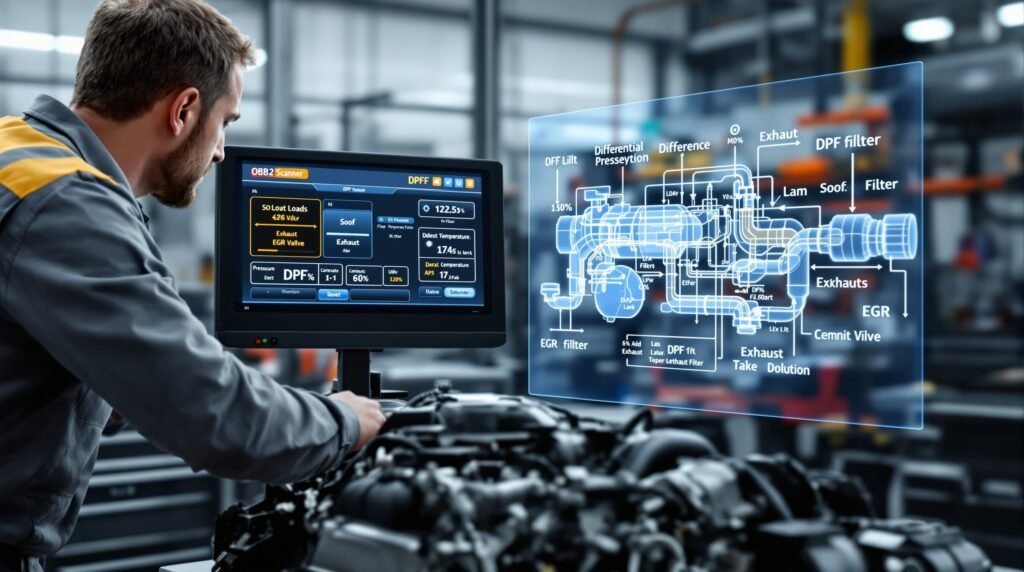
I problemi relativi al DPF sono i seguenti: Problema #1 per i proprietari di veicoli diesel. Una spia accesa sul cruscotto non significa automaticamente che ti aspetta una spesa di 1.500 € per la sostituzione. In questa guida scoprirai quando è sicuro guidare, come funziona effettivamente il tuo sistema di scarico e come una rigenerazione forzata possa farti risparmiare migliaia di euro.
Sintomi comuni dei problemi relativi al DPF e all'EGR
Prima di addentrarti nella diagnostica, cerca di capire con cosa hai a che fare:
- Spia di avvertimento del DPF – Si accende la spia ambra del motore, talvolta accompagnata dall’attivazione della modalità di funzionamento limitato
- Modalità a consumo ridotto – Il tuo motore diesel sembra poco reattivo; l'accelerazione è fortemente limitata
- Fumo o odore proveniente dallo scarico – Presenza di nuvole di fuliggine visibili o odore di carburante bruciato durante i tentativi di rigenerazione
- Aumento del consumo di carburante – Il motore deve lavorare di più per compensare le limitazioni
- Modalità di funzionamento limitato (spia lampeggiante) – L'auto limita la velocità per proteggere il motore; ciò richiede un intervento immediato
Comprendere il sistema di controllo delle emissioni dei motori diesel
I moderni motori diesel presentano due componenti fondamentali per il controllo delle emissioni che operano in sinergia:
DPF (filtro antiparticolato diesel)
Il DPF cattura le minuscole particelle di fuliggine presenti nei gas di scarico. Con il passare del tempo, questa fuliggine si accumula e deve essere bruciata attraverso un processo denominato rigenerazione passiva oppure rigenerazione attiva. La rigenerazione passiva avviene automaticamente durante la normale guida in autostrada, quando le temperature dei gas di scarico raggiungono i 500-600 °C. La rigenerazione attiva viene attivata dalla centralina del motore quando il carico di fuliggine supera i limiti di sicurezza.
EGR (ricircolo dei gas di scarico)
La valvola EGR riduce le emissioni facendo ricircolare una parte dei gas di scarico caldi nel condotto di aspirazione. Con il passare del tempo, sulla valvola si accumulano depositi di carbonio che ne causano il grippaggio o un guasto elettrico. Questo fenomeno è particolarmente comune sui veicoli con elevato chilometraggio e su quelli utilizzati prevalentemente in città.
Perché si è accesa la spia del DPF/EGR
Questi avvisi vengono generati in diverse situazioni:
- DPF pieno di fuliggine – La ricarica passiva non è riuscita a tenere il passo. È un fenomeno comune nei veicoli che raramente superano gli 80 km/h o che effettuano brevi tragitti in città.
- Valvola EGR bloccata o guasta – Si verifica un accumulo di carbonio che impedisce il normale movimento della valvola, oppure viene rilevato un guasto elettrico.
- Il sensore di pressione differenziale indica un valore elevato – Un'ostruzione o un malfunzionamento del sensore indicano una contropressione eccessiva.
- Soglia di temperatura non raggiunta – Lo scarico non si riscalda abbastanza da bruciare la fuliggine. I tragitti brevi e il traffico cittadino impediscono la rigenerazione passiva.
- Problemi relativi al contatore di rigenerazione – Il sistema rileva modelli di rigenerazione anomali o tentativi di rigenerazione non riusciti.
Linee guida per una guida sicura quando la spia è accesa
La spia è fissa (non lampeggia)? Puoi continuare a guidare in sicurezza, ma segui queste indicazioni:
- Evitare di trainare veicoli, trasportare carichi pesanti o guidare in salita per periodi prolungati
- Fai un percorso in autostrada a una velocità superiore a 60 km/h per almeno 15-20 minuti per favorire la rigenerazione passiva. Ciò significa un numero di giri costante e un calore costante, non un traffico a singhiozzo.
- Non ignorare la spia: prenota un controllo entro una settimana
La spia lampeggia? Il motore è in modalità di funzionamento limitato. Ridurre immediatamente la velocità, evitare accelerazioni brusche e far controllare il veicolo prima di intraprendere lunghi viaggi.
Percorso diagnostico professionale
Ecco in cosa consiste una diagnosi adeguata:
Leggi i codici diagnostici
Tra i codici più comuni figurano:
- P0016 / P0400-P0409 – Anomalie relative al sistema EGR
- Codici P04xx – Problemi relativi alla pressione, alla temperatura o alla rigenerazione del DPF
- P0547 – Temperatura dei gas di scarico troppo bassa
Controlla i dati in tempo reale del DPF
- Pressione differenziale: Inferiore a 40 mbar = normale; 40-80 mbar = tenere sotto controllo; 80-200 mbar = si avvicina al limite; >200 mbar = pieno, è necessaria la rigenerazione
- Stima del carico di fuliggine: Espressi in grammi (se disponibili). Valori superiori a 45-50 g indicano che il DPF è quasi saturo.
- Temperatura dei gas di scarico: Durante un tentativo di rigenerazione è necessario monitorare le temperature a monte e a valle del DPF.
Monitorare l'attività di rigenerazione
- Controlla il contatore delle rigenerazioni – Quante rigenerazioni sono state effettuate con successo?
- Quando è avvenuta l'ultima rigenerazione?
- I tentativi di rigenerazione falliscono ripetutamente?
Diagnostica della valvola EGR
Controllare il segnale di posizione della valvola EGR. La valvola dovrebbe muoversi in modo fluido da 0 a 100% quando riceve il comando dalla centralina del motore. Una valvola bloccata o che non risponde richiede una pulizia professionale o la sostituzione.
Rigenerazione forzata: cos’è e quando funziona
A rigenerazione attiva forzata è una procedura controllata in cui la centralina del motore aumenta deliberatamente le temperature di scarico fino a 600-700 °C per bruciare la fuliggine accumulata. Si tratta di non equivalente alla “rimozione manuale del DPF”.”
Come funziona
- Parcheggia in un luogo ben ventilato: dallo scarico usciranno nuvole di fuliggine
- La rigenerazione dura in genere dai 10 ai 30 minuti, a seconda della quantità di fuliggine presente
- Durante il processo, il consumo di carburante aumenta di 5-10%
- Costo: circa 2-5 € di carburante in più per ogni rigenerazione
- Non interrompere il processo – Lascia che si concluda in modo naturale
Quali veicoli supportano la rigenerazione forzata?
La maggior parte dei veicoli diesel moderni supporta la rigenerazione forzata tramite scanner OBD2:
- Ford (Ranger, Transit, Kuga)
- Renault, Peugeot, Citroën (modelli Euro 6)
- Modelli diesel Volvo, BMW e Mercedes
- Modelli Hyundai e Kia con motore diesel
Il tuo meccanico può tentare una rigenerazione forzata se: I codici sono P04xx (specifici per il DPF), la pressione differenziale è compresa tra 80 e 200 mbar e il sistema EGR funziona correttamente. Se i codici indicano un guasto dell'EGR o se la pressione differenziale supera i 250 mbar, è necessario procedere alla pulizia meccanica o alla sostituzione.
Prevenzione: come mantenere pulito il DPF
- Viaggi regolari in autostrada – Almeno una corsa a una velocità superiore a 60 km/h per più di 30 minuti a settimana per mantenere la rigenerazione passiva
- Utilizzare gasolio di qualità – Il carburante a basso costo accelera l'intasamento del DPF
- Evitare di lasciare il motore al minimo per periodi prolungati – Un periodo di inattività prolungato impedisce la rigenerazione e comporta uno spreco di carburante
- Sostituire l'olio e il filtro secondo il programma previsto – L’olio sporco aggira gli anelli del pistone, accelerando l’accumulo di fuliggine nel DPF
- Controllare la pressione degli pneumatici – Gli pneumatici sgonfi aumentano la resistenza al rotolamento, riducendo l’efficienza del motore e la capacità di rigenerazione passiva
Ripartizione dei costi: cosa aspettarsi
- Rigenerazione forzata (fai da te tramite meccanico): €0-50
- Pulizia del DPF (ad ultrasuoni/termica): €300-600
- Sostituzione del DPF: 800-2000+ € (ricambi + manodopera)
- Pulizia della valvola EGR: €200-400
- Sostituzione della valvola EGR: €300-800
- Sostituzione del sensore di pressione differenziale: €150-300
Domande frequenti
È sicuro guidare con la spia del DPF accesa?
Sì, se la spia è fissa e non lampeggia. Evita i carichi pesanti e percorri un tratto di autostrada per favorire la rigenerazione. Se la spia lampeggia, riduci immediatamente la velocità.
Posso rimuovere completamente il DPF?
Dal punto di vista tecnico, sì. Dal punto di vista legale, no – non nei paesi dell’UE. La rimozione del DPF comporta il mancato superamento dei test sulle emissioni e comporta multe. La rigenerazione forzata è l’alternativa sicura.
La rigenerazione forzata è sicura per il mio motore?
Assolutamente sì. La rigenerazione forzata è una procedura approvata dal costruttore che porta la temperatura ai livelli normali di rigenerazione (600-700 °C). È sicura e comunemente raccomandata dai costruttori.
Con quale frequenza dovrei guidare in autostrada?
Almeno una volta alla settimana per più di 30 minuti a velocità costanti superiori a 60 km/h. Una guida più frequente in autostrada previene del tutto i problemi al DPF.
E se la rigenerazione forzata non funzionasse?
Se, dopo un tentativo di rigenerazione, i codici di errore persistono, è probabile che il DPF presenti danni fisici o un accumulo di cenere che richiedono una pulizia professionale o la sostituzione.
I problemi all'EGR possono causare problemi al DPF?
Sì. Una valvola EGR bloccata provoca un'eccessiva produzione di fuliggine, che intasa più rapidamente il DPF. Per un funzionamento ottimale, entrambi i sistemi devono essere in buone condizioni.
La mia auto supererà il controllo delle emissioni con un DPF pulito?
Sì. Un DPF pulito o sostituito correttamente, abbinato a un sistema EGR funzionante, supera senza problemi i test sulle emissioni.
In conclusione: Gli avvisi relativi al DPF non sono una condanna a morte automatica. Con una diagnosi adeguata e una manutenzione tempestiva, una rigenerazione forzata o una pulizia professionale costano molto meno della sostituzione completa. Siate proattivi, mantenete buone abitudini di guida in autostrada e intervenite prontamente in caso di avvisi.

 English
 French
 Spanish
 German
 Polish
 Czech
Czech Romanian
 Italian