
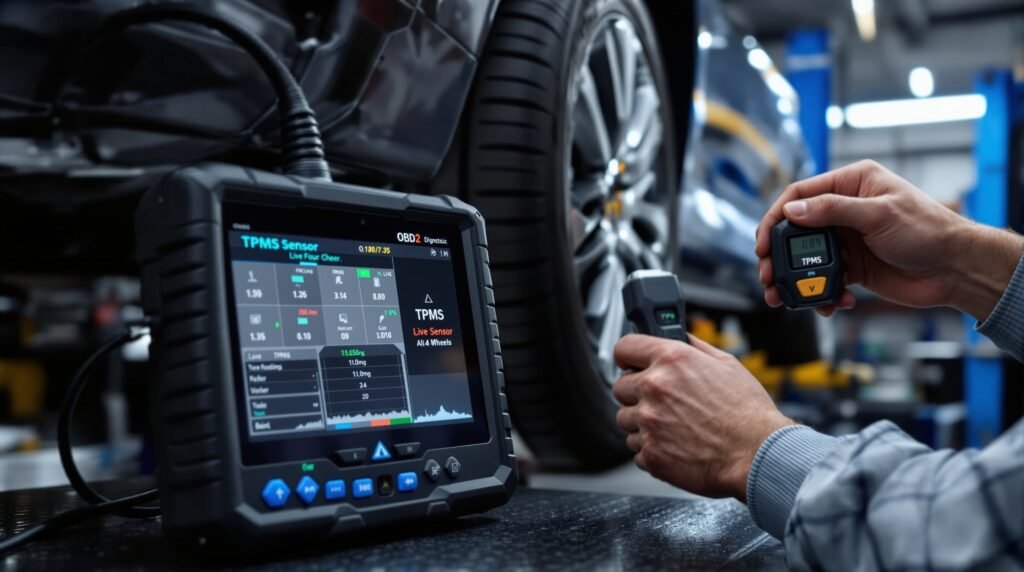
Kontrolka TPMS świeci się, sprawdziłeś ciśnienie w oponach ręcznym manometrem i wygląda na to, że jest w porządku. Mimo to ostrzeżenie pozostaje podświetlone na desce rozdzielczej. Ta frustrująca sytuacja jest częstsza niż mogłoby się wydawać, zwłaszcza po zmianie opon lub sezonowej wymianie kół. Dobra wiadomość: problem można zazwyczaj rozwiązać bez kosztownych napraw. Haczyk: musisz wiedzieć, czy Twój pojazd używa bezpośredni TPMS (czujniki bezprzewodowe) lub pośredni TPMS (obliczonej na podstawie prędkości obrotowej koła), ponieważ każda z nich wymaga zupełnie innego podejścia diagnostycznego.
Typowe objawy
Lampka ostrzegawcza TPMS pojawia się na desce rozdzielczej - w zależności od pojazdu jest to zwykła lampka lub bardziej szczegółowy komunikat ostrzegawczy. Następnie sprawdzasz ciśnienie w oponach na stacji benzynowej i okazuje się, że wszystkie cztery opony mają prawidłowe PSI (funty na cal kwadratowy) zgodnie z tabliczką na ościeżnicy drzwi. Ręczna kontrola za pomocą wysokiej jakości manometru również potwierdza prawidłowe ciśnienie. Jednak po rozpoczęciu jazdy kontrolka powraca. Albo kontrolka pojawiła się zaraz po zmianie opony, sezonowej wymianie koła lub wymianie obręczy koła.
Niektóre pojazdy wyświetlają również określone kody usterek lub dane na żywo pokazujące “nie wykryto czujnika” lub “słaby sygnał czujnika” na skanerze diagnostycznym, nawet jeśli pojazd działa prawidłowo.
Dlaczego tak się dzieje: Bezpośredni vs. Pośredni TPMS
Przed przystąpieniem do diagnostyki należy zrozumieć, z jakiego systemu TPMS korzysta pojazd:
Bezpośredni TPMS (najczęściej)
Bezpośrednie systemy TPMS wykorzystują czujniki bezprzewodowe zamontowane wewnątrz każdej obręczy koła które w sposób ciągły przesyłają dane o ciśnieniu w oponach do modułu odbiornika pojazdu. Czujniki te zawierają przetwornik ciśnienia, nadajnik radiowy i niewielką baterię (zazwyczaj wystarczającą na 5-10 lat). Po zmianie opony, założeniu nowego koła lub awarii czujnika, pojazd przestaje odbierać sygnał z danej pozycji koła. Moduł wykrywa brak sygnału i uruchamia lampkę ostrzegawczą.
Dlaczego kontrolka pozostaje włączona: Nowa opona może nie mieć czujnika, stary czujnik nie został zainstalowany w nowej oponie lub bateria czujnika jest rozładowana. Ponadto, nawet jeśli czujnik jest obecny, może być konieczna jego wymiana. sparowany lub zaprogramowany z pojazdem aby nadawać na właściwej częstotliwości.
Pośredni system TPMS
Pośrednie systemy TPMS wykorzystują brak jakichkolwiek czujników. Zamiast tego system oblicza ciśnienie w oponach, monitorując prędkość obrotową każdego koła za pomocą czujników prędkości ABS. Jeśli jedna opona jest niedopompowana, ma nieco mniejszą średnicę i obraca się szybciej niż pozostałe. Moduł TPMS wykrywa tę różnicę i szacuje spadek ciśnienia.
Dlaczego kontrolka pozostaje włączona: Po zmianie opon system “zapomniał” o podstawowym profilu prędkości kół. Należy mu powiedzieć, aby przywrócił tę linię bazową - proces ten nazywa się Ponowne uczenie TPMS.
Kroki diagnostyczne: Jak to naprawić
Krok 1: Odczyt kodów błędów TPMS
Użyj skanera diagnostycznego zdolnego do odczytu kodów modułu TPMS. Typowe kody obejmują:
- C1234 / B1234: Brak sygnału czujnika TPMS (bezpośredni TPMS)
- P0456: Wadliwe działanie modułu TPMS
- U0100: Utrata komunikacji z odbiornikiem TPMS
Kody usterek i dane na żywo natychmiast poinformują Cię, czy masz do czynienia z systemem bezpośrednim czy pośrednim oraz które koło (jeśli w ogóle) ma uszkodzony lub brakujący czujnik.
Krok 2: Sprawdzanie danych na żywo
W trybie danych bieżących TPMS obserwuj stan sygnału czujnika dla wszystkich czterech kół. W przypadku bezpośrednich systemów TPMS powinno być to widoczne:
- Odczyty ciśnienia w oponach z każdego koła (zwykle w kPa lub PSI)
- Siła sygnału czujnika lub status “OK” dla każdej pozycji
- Odczyty temperatury z każdego czujnika
Jeśli na jednym lub kilku kołach wyświetlany jest komunikat “nie wykryto czujnika”, “brak sygnału” lub “błąd”, oznacza to, że zidentyfikowano problematyczne koło (koła).
Krok 3: Porównanie z ręczną kontrolą ciśnienia
Użyj wysokiej jakości miernika ciśnienia w oponach, aby ręcznie sprawdzić wszystkie cztery opony i koło zapasowe (jeśli jest na wyposażeniu). Porównaj te odczyty z tym, co pokazuje skaner diagnostyczny w danych na żywo. W przypadku bezpośredniego systemu TPMS odczyty powinny być ściśle zgodne. Jeśli skaner nie pokazuje żadnych danych z koła, ale ręczna kontrola potwierdza, że ciśnienie jest w porządku, sam czujnik jest uszkodzony.
Bezpośredni TPMS: wymiana i parowanie czujników
Jeśli zidentyfikowałeś brakujący lub uszkodzony czujnik (dane na żywo pokazują brak sygnału lub słaby sygnał z określonego koła):
Wymiana czujnika
Technik musi zdjąć oponę z obręczy, zdemontować stary zespół czujnika/trzpienia zaworu i zainstalować nowy. Nowe czujniki zazwyczaj kosztują 80-200 euro za koło w zależności od pojazdu i marki czujnika. Czujniki premium lub części OEM są droższe.
Ważne: Niektórych baterii czujnika nie można wymienić - należy wymienić cały zespół czujnika.
Parowanie nowego czujnika
Po instalacji nowy czujnik musi zostać zaprogramowany lub sparowany z pojazdem. Proces ten różni się w zależności od producenta:
- Automatyczne parowanie: Niektóre pojazdy (zwłaszcza nowsze modele Audi, VW i Porsche) automatycznie rozpoznają nowe czujniki w ciągu 20 minut jazdy.
- Wymagane narzędzie dealera: Wiele pojazdów wymaga narzędzia do ponownego przyuczenia TPMS lub systemu diagnostycznego dealera do ręcznego sparowania czujników. Jest to proces trwający od 5 do 15 minut.
- Metoda narzędzia OBD2: Niektóre uniwersalne skanery diagnostyczne OBD2 posiadają funkcję programowania TPMS, choć ich kompatybilność jest różna.
Po sparowaniu kontrolka powinna zgasnąć w ciągu kilku minut normalnej jazdy.
Pośredni system TPMS: Procedura ponownego uczenia
Jeśli Twój pojazd korzysta z pośredniego systemu TPMS i wykluczyłeś wadliwy czujnik:
Napompuj wszystkie opony zgodnie ze specyfikacją
Sprawdź tabliczkę z ciśnieniem na ościeżnicy drzwi kierowcy i napompuj wszystkie cztery opony do zalecanej wartości PSI. Nie przepompowuj powietrza.
Wejdź w tryb uczenia systemu TPMS
Za pomocą skanera diagnostycznego przejdź do modułu TPMS lub ABS i wybierz opcję “relearn” lub “reset” (dokładne nazewnictwo zależy od skanera). Niektóre pojazdy umożliwiają również ponowne przyuczenie za pośrednictwem menu na desce rozdzielczej bez skanera.
Prowadzenie pojazdu
Jazda ze stałą prędkością 50+ km/h (30+ mph) dla 15-20 minut. System wykorzystuje ten cykl jazdy do przywrócenia podstawowego profilu prędkości kół. W tym okresie należy unikać gwałtownego przyspieszania, hamowania lub ostrych zakrętów.
Wyczyść kontrolkę TPMS
Po zakończeniu cyklu jazdy użyj skanera diagnostycznego, aby wyczyścić kody błędów TPMS. Kontrolka powinna pozostać wyłączona podczas dalszej jazdy.
Specyficzne dla marki dziwactwa i wyjątki
Niektóre pojazdy komplikują sprawę, używając zarówno bezpośredni, jak i pośredni TPMS jednocześnie. W takich przypadkach może być konieczne wykonanie parowania czujników i cykl ponownego przyuczenia. Niemieckie marki premium (BMW, Audi, Mercedes) szczególnie często wymagają programowania na poziomie dealera lub wielokrotnych prób ponownego przyuczenia.
Niektóre modele mają również systemy TPMS, które “blokują” tryb ponownego uczenia po określonej liczbie prób, wymagając zresetowania przez dealera, aby kontynuować.
Gdy bateria czujnika rozładuje się
Bezpośrednie czujniki TPMS mają wbudowane baterie o żywotności 5-10 lat (w zależności od klimatu i sposobu użytkowania). Gdy bateria się wyczerpie, czujnik przestaje nadawać, uruchamiając lampkę ostrzegawczą. Baterie te nie są wymienialne przez użytkownika-Należy wymienić cały zespół czujnika.
Jeśli czujnik jest starszy niż 5-7 lat i występują powtarzające się problemy, wymiana może być bardziej opłacalna niż rozwiązywanie problemów.
Podział kosztów
- Wymiana pojedynczego czujnika: 80-200 € za koło (części + robocizna)
- Wczytywanie TPMS za pomocą narzędzia OBD2: €0-€50 (DIY z odpowiednim skanerem)
- Ponowne wczytywanie TPMS u dealera: €50-€100
- Pełny zestaw 4 czujników: €300-€800
- Programowanie/parowanie przez dealera: 30-150 EUR za pojazd (oprócz kosztu czujnika)
FAQ
Jak długo działają czujniki TPMS?
Bezpośrednie czujniki TPMS działają zazwyczaj przez 5-10 lat. Żywotność baterii zależy od temperatury, nawyków jazdy i konstrukcji czujnika. Pośrednie systemy TPMS nie mają czujników, więc działają tak długo, jak moduł ABS.
Czy mogę jeździć z włączoną kontrolką TPMS?
Tak, pojazd pozostaje bezpieczny w prowadzeniu. Straciłeś jednak system wczesnego ostrzegania o niebezpiecznym spadku ciśnienia w oponach. Napraw ten problem jak najszybciej, aby przywrócić pełne monitorowanie bezpieczeństwa.
Czy muszę wymienić wszystkie 4 czujniki, jeśli jeden ulegnie awarii?
Nie. Wymień tylko wadliwy czujnik. Jeśli jednak wszystkie cztery czujniki mają ponad 7 lat, rozważ wymianę wszystkich czterech podczas wymiany opon, aby uniknąć powtarzających się problemów.
Czy mogę użyć skanera OBD2, aby samodzielnie to naprawić?
W przypadku pośredniego wczytywania TPMS, tak - jeśli skaner to obsługuje. W przypadku bezpośredniego parowania czujnika TPMS zależy to od pojazdu. Uniwersalne narzędzia rzadko obsługują wszystkie marki i modele. Dealer lub wyspecjalizowany sklep TPMS posiada dedykowane narzędzia.
Dlaczego po wymianie opon konieczne jest ponowne nauczenie systemu TPMS?
Pośrednie systemy TPMS obliczają ciśnienie na podstawie prędkości koła. Nowe opony mają inną charakterystykę toczenia niż stare. System musi ponownie skalibrować swoje szacunki ciśnienia do tych nowych prędkości bazowych.
Co zrobić, jeśli kontrolka pozostaje włączona nawet po wymianie i sparowaniu czujnika?
Sprawdź, czy nie występuje usterka modułu odbiornika, uszkodzone okablowanie kół lub uszkodzony moduł sterujący TPMS. Skan diagnostyczny powinien ujawnić, czy uszkodzeniu uległ sam moduł.
Czy istnieje sposób na wyłączenie TPMS?
W większości regionów system TPMS jest obowiązkowy i nie można go wyłączyć. Jednak niektóre pojazdy umożliwiają “tryb serwisowy”, który tymczasowo wycisza ostrzeżenie na czas naprawy.
Podsumowanie
Utrzymująca się kontrolka ostrzegawcza systemu TPMS po wymianie opon lub koła jest zwykle spowodowana brakiem sygnału z czujnika (bezpośredni system TPMS) lub koniecznością ponownego przyuczenia systemu (pośredni system TPMS). Dysponując skanerem diagnostycznym i podstawową wiedzą na temat typu systemu w pojeździe, można wskazać problem i samodzielnie przeprowadzić prostą procedurę ponownego przyuczenia lub zlecić wymianę czujnika i parowanie w warsztacie. Koszt i złożoność są różne, ale dobrą wiadomością jest to, że usterki TPMS rzadko są kosztowne, jeśli zostaną wcześnie wykryte.
 English
 French
 Spanish
 German
 Polish
 Czech
Czech Romanian
 Italian