
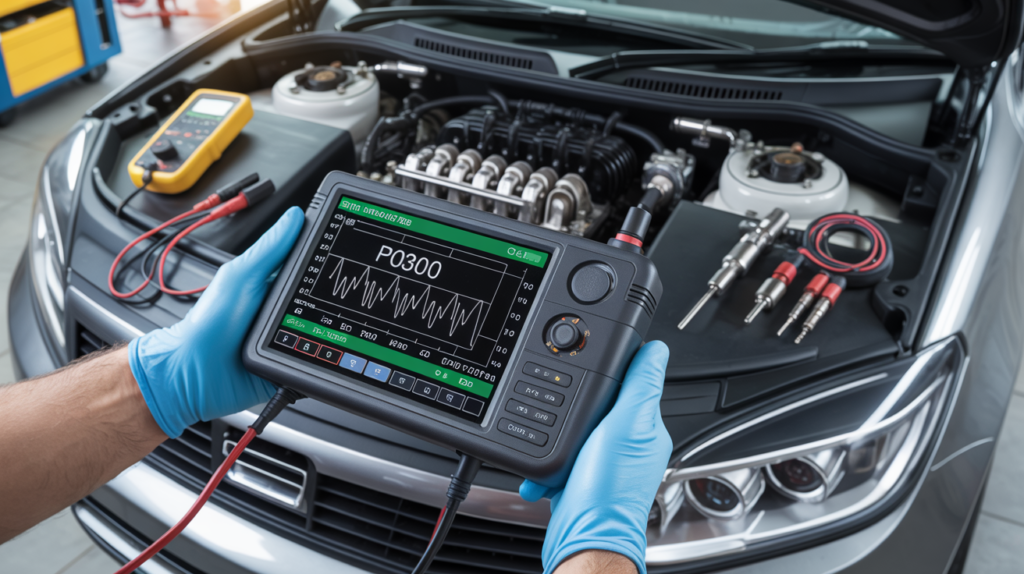
Dacă motorul tău vibrează la ralanti, ezită la accelerare sau indicatorul „Check Engine” este aprins, există o mare probabilitate să te confrunți cu o ratare a aprinderii motorului. Aceasta este una dintre cele mai frecvente probleme căutate de șoferi — și una dintre cele mai des diagnosticate greșit.
Ratările de aprindere afectează motoarele pe benzină, diesel și hibride. Care este cea mai mare (și cea mai costisitoare) greșeală? Înlocuirea pieselor fără a stabili mai întâi cauza principală.
Acest ghid vă arată cum să diagnosticați corect codurile de ratare a aprinderii P0300 (ratări aleatorii ale aprinderii) și P0301–P0306 (ratări de aprindere la un cilindru anume) folosind instrumente OBD2 și date în timp real.
⚠️ Siguranța pe primul loc
Dacă indicatorul „Check Engine” este intermitent, opriți-vă imediat din condus. O ratare gravă a aprinderii poate duce la supraîncălzirea și distrugerea convertorului catalitic în câteva minute.
Semne de avertizare urgente:
- Vibrații puternice ale motorului
- Miros puternic de combustibil provenind din sistemul de evacuare
- Întrerupere bruscă a alimentării cu energie electrică
Simptome frecvente ale ratării aprinderii motorului
Acestea sunt cele mai căutate și semnalate probleme:
- Ralanti neregulat sau vibrații ale motorului
- Ezitarea sau sacadarea în timpul accelerării
- Întreruperea alimentării cu energie electrică
- Creșterea consumului de combustibil
- Miros de combustibil provenit de la țeava de eșapament
- Lampa de avertizare „Check Engine” (aprinsă continuu sau intermitentă)
- Se produc ratări de aprindere doar când motorul este rece, fierbinte sau sub sarcină
Instrumentele necesare pentru un diagnostic corect
Cititoarele OBD2 de bază pot afișa codurile de eroare — dar datele în timp real sunt esențiale pentru un diagnostic real.
Instrumente recomandate:
- Nivel de începători: Vgate iCar Pro 2S (Bluetooth OBD2)
- Gama medie: Delfi DS150e Premium (date în timp real + contoare de ratări de aprindere)
- Profesional: Wurth WOW Snooper / Multidiag Pro
Pasul 1: Citirea codurilor de eroare și a datelor din memoria de erori
Conectați scanerul OBD2 și înregistrați:
- Toate codurile de eroare
- Date de captură (turație, temperatura lichidului de răcire, sarcină, ajustări ale consumului de combustibil)
De ce este important:
- Ratarea aprinderii la ralanti → adesea o scurgere de vid sau o problemă la sistemul de aprindere
- Ratare a aprinderii sub sarcină → de obicei, o problemă legată de combustibil sau de sistemul de aprindere
Pasul 2: Identificarea tipului de ratare a aprinderii
- P0301–P0306 → Ratare specifică a unui cilindru
- P0300 → Ratări ale aprinderii aleatorii sau la mai multe cilindri
Sfat: Scanerele avansate afișează numărătoare în timp real a ratărilor de aprindere pe cilindru, ceea ce accelerează procesul de diagnosticare.
Pasul 3: Analiza datelor în timp real (pas esențial)
Reglajele de combustibil (STFT și LTFT)
de la +10% la +25% (condiție de amestec sărac)
→ Scurgere de vid, presiune scăzută a combustibilului, senzor MAF murdarde la -10% la -25% (condiție de amestec bogat)
→ Injector cu scurgere, presiune ridicată a combustibilului, problemă cu sistemul EVAP
Temperatura lichidului de răcire al motorului (ECT)
Valorile incorecte ale indicatorilor pot duce la un amestec de combustibil necorespunzător și la o funcționare neregulată a motorului.
Date de la senzorul MAF / MAP
Valorile instabile sau nerealiste indică adesea:
- Scurgeri de aer de admisie
- Senzor MAF murdar sau defect
Pasul 4: Remedierea ratărilor de aprindere specifice unui cilindru (P0301–P0306)
Aceasta este cea mai simplă și mai ieftină variantă.
4.1 Verificați mai întâi componentele sistemului de aprindere
Majoritatea ratărilor de aprindere sunt legate de sistemul de aprindere.
- Verificați bujiile (uzură, prezența uleiului, fisuri, distanța între electrozi)
- Înlocuiți bobina de aprindere cu cea a unui alt cilindru
- Ștergeți codurile și repetați testul
👉 Dacă ratarea aprinderii se deplasează → s-a confirmat defectarea bobinei
4.2 Verificarea injectorului de combustibil
- Fii atent la sunetul de clic
- Verificați impulsul injectorului prin intermediul datelor în timp real
- Verificați presiunea combustibilului (de obicei 2,5–4,0 bar)
4.3 Verificarea sistemului mecanic al motorului
Dacă sistemul de aprindere și alimentarea cu combustibil funcționează corect:
- Proba de compresie (supape, segmente de piston)
- Scurgere la admisie în apropierea cilindrului respectiv
- Problemă cu garnitura de chiulasă
Pasul 5: Diagnosticarea ratărilor aleatorii de aprindere (P0300)
Mai complex — afectează mai mulți cilindri.
Scurgeri de vid (foarte frecvente)
- Ralanti neregulat, se îmbunătățește la turații mai mari
- Reglaje ridicate ale amestecului de combustibil la ralanti
- Verificați:
- Furtunuri PCV
- Manșon de admisie
- Garnitură pentru colector
Probleme legate de alimentarea cu combustibil
- Ratare a aprinderii în timpul accelerării
- Coduri de stare „Lean”
- Verificați:
- Presiunea pompei de combustibil
- Filtru de combustibil
- Regulator de presiune
Defecțiunea sistemului de aprindere sub sarcină
- Funcționează bine în repaus, dar prezintă defecțiuni sub sarcină
- Situația se agravează pe timp de ploaie
- Dopuri uzate sau bobine slabe
Probleme cu senzorii (MAF / O2)
- Valori incorecte ale debitului de aer sau ale nivelului de oxigen
- Duce la un amestec de combustibil necorespunzător
- Compară valorile MAF cu valorile preconizate
Pasul 6: Verificarea reparației
După remedierea problemei:
- Șterge toate codurile de eroare
- Test de conducere în aceleași condiții
- Monitor:
- Contori de rateuri
- Reglajele de combustibil (ar trebui să se normalizeze)
Detalierea costurilor (reparații obișnuite)
- Bujii: 20–80 €
- Bobină de aprindere: 50–150 €
- Injector de combustibil: 100–300 €
- Pompa de combustibil: 300–800 €
- Convertor catalitic: 500–1.500 €
- Instrument de diagnosticare: 57–300 € (investiție unică)
Întrebări frecvente – Cele mai des puse întrebări
Pot să conduc cu codul P0300?
- Lumină intermitentă → NU (opriți-vă imediat)
- Lumină continuă → numai pentru conducerea pe distanțe scurte
Ce înseamnă STFT și LTFT?
- STFT = ajustări pe termen scurt (instantanee)
- LTFT = corecții învățate pe termen lung
- Ambele ridicate → problemă reală legată de combustibil
Am nevoie de un scaner profesional?
- Pentru codurile de bază → nu
- Pentru un diagnostic real → da (datele în timp real sunt esențiale)
Poate un senzor de O₂ defect să provoace o ratare a aprinderii?
Da. Aceasta afectează reglajele de combustibil → amestec aer-combustibil incorect.
Ce ar trebui să verific mai întâi?
Începeți întotdeauna cu bujii—ieftine și foarte decoltate.
Concluzie finală
- P0301–P0306 → Începeți cu aprinderea la cilindrul respectiv
- P0300 → Verificați dacă există probleme la nivel de sistem (vid, combustibil, senzori)
- Nu înlocuiți niciodată piesele la întâmplare — folosiți date în timp real pentru a ghida luarea deciziilor

 English
 French
 Spanish
 German
 Polish
 Czech
Czech Romanian
 Italian